Designing an effective residential alarm system is not simply a matter of placing detectors in every room. A good alarm system should be practical, reliable, easy to use and designed around how the home is actually lived in.
At Stemar Security Systems, we consider the layout of the property, the position of the sleeping areas, likely entry points, valuable areas, outdoor access routes and how the system will be used when the occupants are home, asleep or away.
The aim is to create a system that provides early warning where possible, protects important areas and reduces the risk of false alarms.
Designing Around How You Use the Home
One of the most important parts of alarm system design is understanding how the system will be used in everyday life.
Most residential alarm systems are used in two main ways:
Stay / Night Mode
Stay or Night Mode is used when people are at home, especially at night.
In this mode, the sleeping areas usually remain disarmed so that occupants can move around freely. However, the rest of the home should still be protected.
This normally includes areas such as lounges, studies, garages, passages, kitchens, sculleries and any areas leading toward the bedrooms.
The idea is to create a protected buffer zone between the outside of the home and the sleeping area.
Away Mode
Away Mode is used when nobody is home.
In this mode, the full alarm system can normally be armed. The focus is to protect likely entry points and movement routes. It is not always necessary to install a detector in every single room, provided that an intruder will be detected when moving from that room into the passage, living area or another protected zone.
For example, a spare bedroom may not always require its own PIR detector unless it contains valuables, has a vulnerable entry point, or early detection in that room is specifically required.
Protecting the Sleeping Areas
The sleeping area is one of the most important parts of the home to consider when designing an alarm system.
In many homes, the sleeping area does not only include the bedrooms. It may also include the bedroom passage and nearby bathrooms, especially where children or guests may need to move around at night.
For this reason, the alarm system should be designed so that occupants can move safely within the sleeping area without triggering false alarms.
Where the bedroom passage needs to remain disarmed at night, protection should focus on the areas leading toward the sleeping section. This may include lounges, kitchens, sculleries, garages, stairways, interleading doors and other internal areas between the outside of the home and the bedrooms.
Outdoor detection is also very important in this type of design. Properly positioned outdoor detectors can provide early warning before an intruder reaches the doors, windows or sleeping area of the home.
The aim is to create a practical protected buffer zone around the sleeping area, while still allowing normal movement inside the bedrooms, passage and bathrooms at night.
Recommended Indoor PIR Placement
Indoor PIR detectors are used to detect movement once someone has entered a protected area.
Typical recommended locations include:
Main bedroom, especially where valuables, safes or personal items are stored
Bedroom passages and areas leading toward sleeping sections
Studies and home offices
TV lounges and main living areas
Garages
Outdoor storage rooms
Rooms containing high-value items
Common movement routes an intruder would likely pass through
It is not always necessary to install PIRs in every bedroom. Spare bedrooms are often less critical unless they contain valuable items, have an easy entry point, or the client specifically wants earlier detection in that area.
Door and Window Contacts
Door and window contacts are useful for detecting when a door or window is opened.
They are especially helpful in areas that are not protected by a PIR detector, or where early detection is required before someone has entered fully into the room.
Common locations for door and window contacts include:
Front doors
Back doors
Scullery doors
Patio and sliding doors
Garage interleading doors
Windows in unprotected rooms
Rooms where movement detection is not practical
Contacts are also useful in areas where occupants may want to keep part of the home armed while still moving around inside.
For example, a front door contact can remain armed at night while the indoor living areas are disarmed, depending on the system design.
Outdoor Detection and Early Warning
Outdoor detection is one of the best ways to provide early warning before an intruder enters the home.
Instead of waiting for movement inside the house, outdoor detectors can protect approach areas such as doors, windows, patios, driveways, side passages and vulnerable access points.
Outdoor detectors are commonly used to protect:
Sliding doors
Patio areas
Front and back doors
Windows
Side passages
Garage doors
Courtyards
Boundary wall access points
Low walls, flat roofs or easy climbing points
The goal is not simply to cover open garden space, but to protect the specific areas where an intruder is most likely to approach the house.
Correct Outdoor Detector Positioning
Outdoor detectors must be positioned carefully.
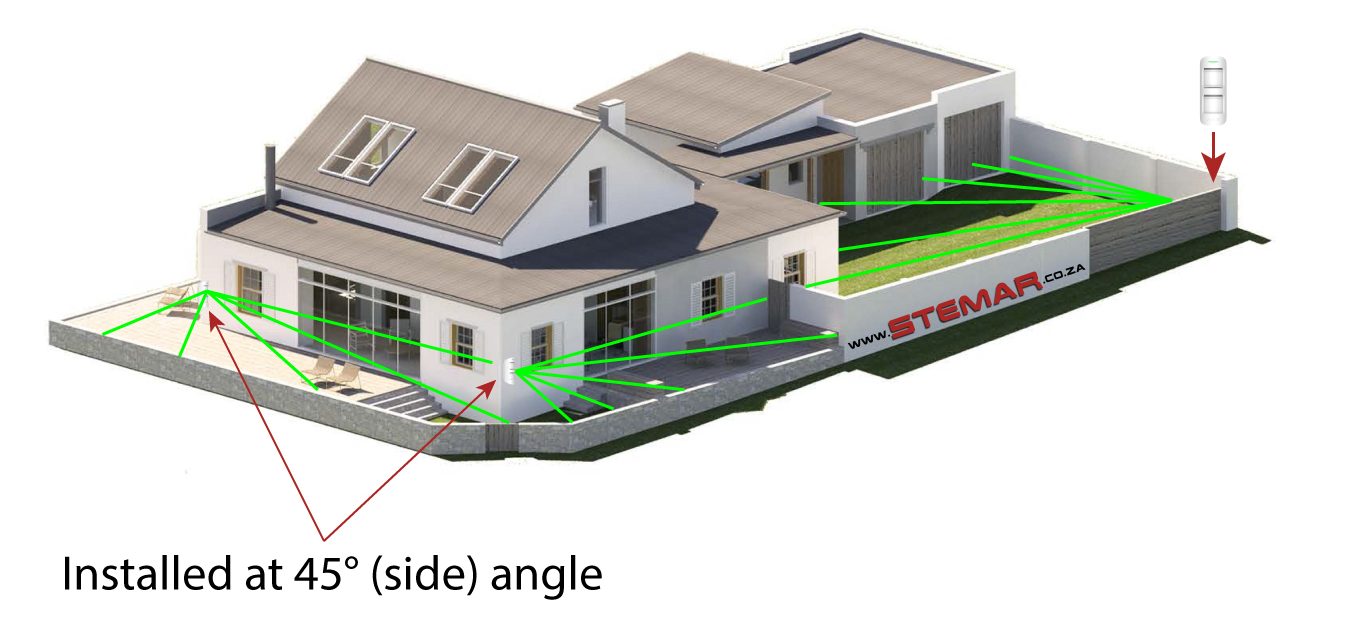
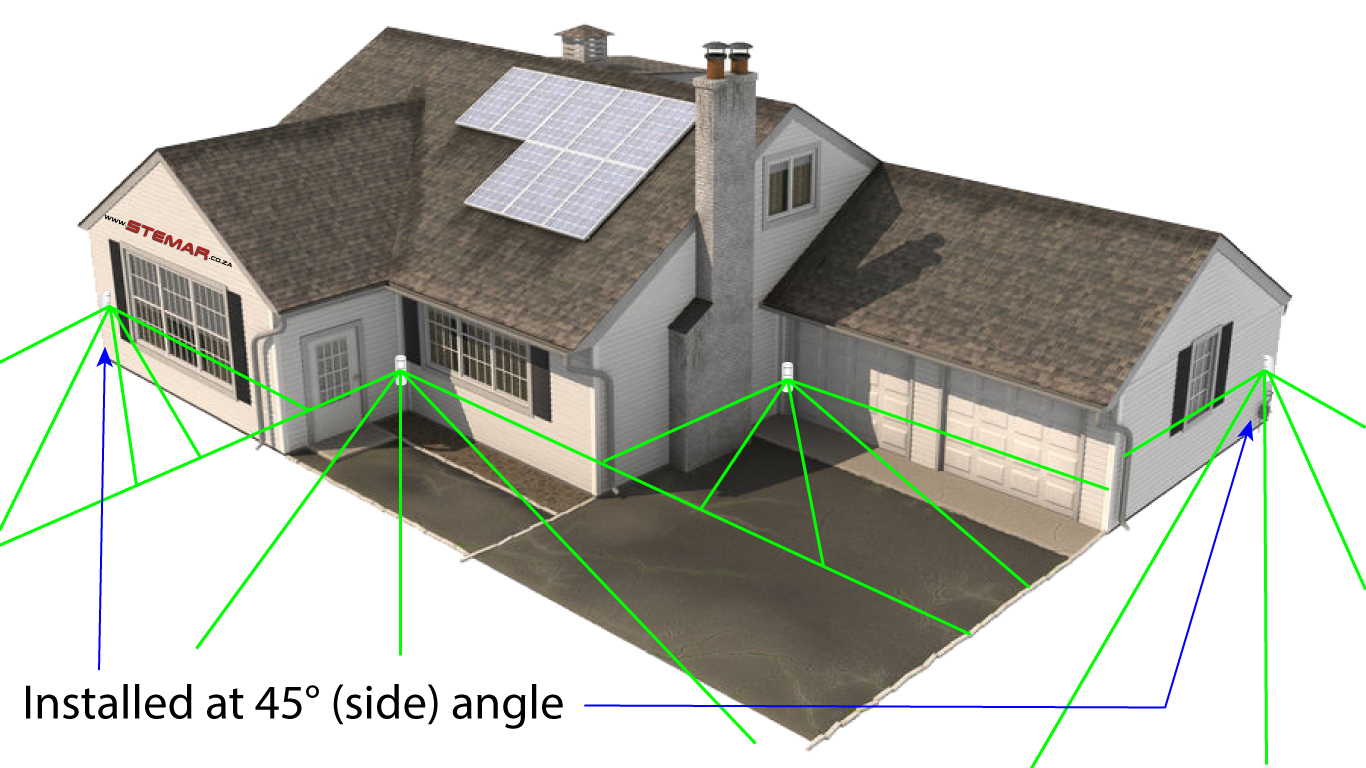
Where possible, detectors should be installed to look across a protected area rather than directly at the house or directly into open space. Side-angle placement can be very effective for protecting doors, windows and narrow approach areas.
This type of installation can help cover multiple vulnerable points while reducing unwanted activations caused by movement outside the protected area.
Outdoor detection should always take into account:
The manufacturer’s recommended mounting height
The detection angle and range
Pets and animals
Trees, plants and shrubs
Washing lines and loose outdoor items
Direct sunlight and reflections
Rain, wind and exposed areas
Driveways and areas with regular movement
A shorter, cleaner detection path is often more reliable than trying to cover the maximum possible distance.
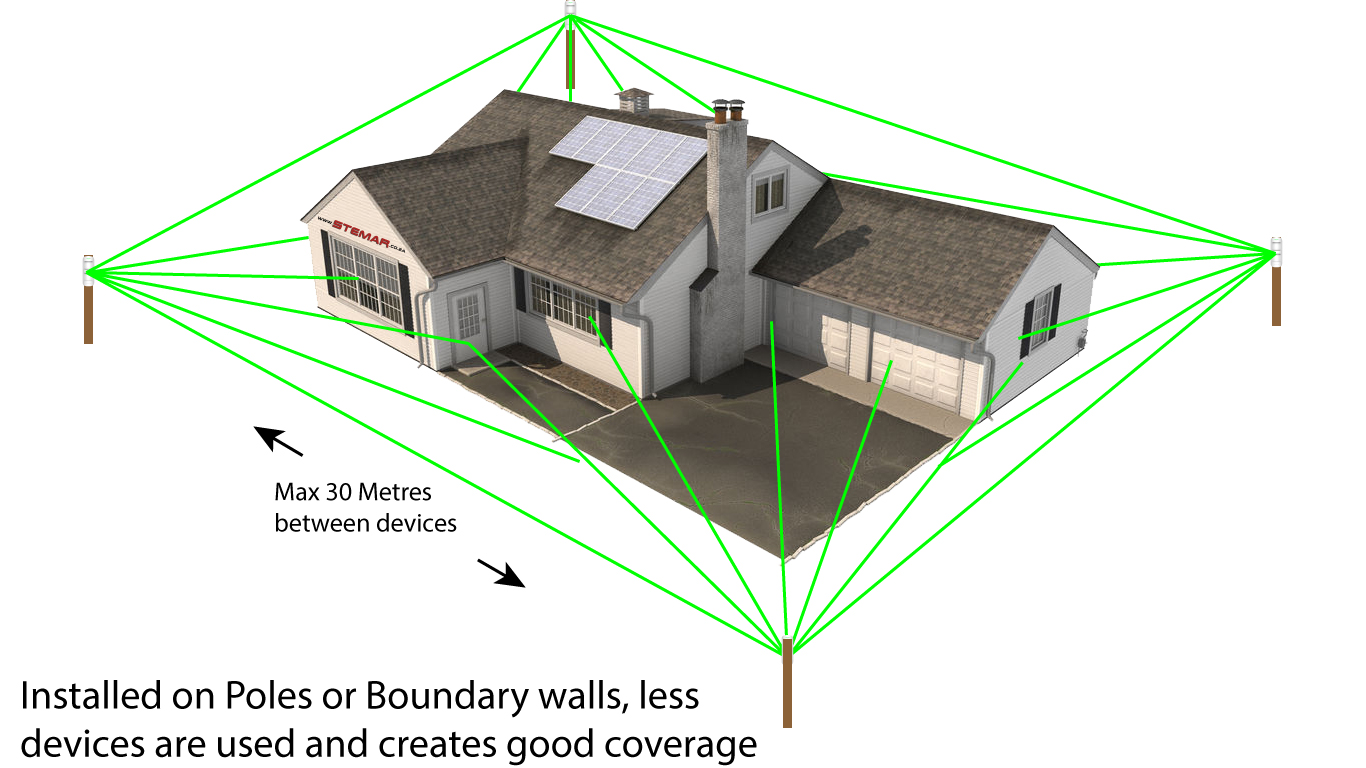
Boundary Wall and Pole-Mounted Detection
In some cases, outdoor detectors can be installed on boundary walls, poles or strategic corners of the property.
This can provide good outdoor coverage with fewer devices, especially on larger properties or where the house layout allows detectors to face across important approach areas.
Pole-mounted or boundary-mounted detection can be useful for covering:
Long side passages
Driveway approaches
Garden areas close to the house
Boundary wall access points
Multiple doors or windows from a single position
However, the distance between devices, detection pattern and site conditions must be carefully considered. Outdoor beams and detectors should always be installed within the manufacturer’s recommended operating distance.
Layered Protection Works Best
The most effective residential alarm systems usually use a layered approach.
Outdoor detection provides early warning before the intruder enters the home.
Door and window contacts detect entry points being opened.
Indoor PIRs detect movement once someone is inside the protected area.
By combining these layers, the alarm system becomes more practical, more reliable and more effective.
A well-designed system does not always mean using the most devices. It means placing the right devices in the right areas.
Avoiding False Alarms
False alarms are one of the main reasons alarm systems become frustrating to use.
A good alarm design should reduce the chance of false alarms while still detecting genuine threats.
Common false alarm considerations include:
Pets inside the home
Dogs, cats or wildlife outside
Moving trees, shrubs or plants
Garages with insects, rodents or draughts
Direct sunlight
Reflective surfaces
Air conditioners
Curtains or blinds moving in the wind
Washing lines
Loose outdoor furniture or covers
Pool covers or water features
Outdoor detectors should be aimed at specific protected zones, such as a wall, walkway, door or window area. A detector facing an open garden or a busy area is more likely to cause unwanted activations.
Not Every Room Needs the Same Level of Protection
Every room in a home does not carry the same risk.
A main bedroom, study, garage or TV lounge may contain valuable items and should usually receive more attention. A spare bedroom with no valuables may be less important if the passage outside the room is already protected.
The design should be based on risk, lifestyle and practicality, rather than simply installing a detector in every available space.
Important Design Considerations
Before finalising an alarm system design, consider:
Where the occupants sleep
Which areas must remain disarmed at night
Which areas contain valuables
The most likely entry points
The layout of passages and living areas
Whether pets are present
Whether outdoor early warning is required
Whether the system must be expanded later
Budget and maintenance requirements
How easy the system will be to use daily
A system that is too complicated may not be used correctly. A system that is too basic may not provide enough protection. The best design is a practical balance between security, reliability and ease of use.
Final Recommendation
A residential alarm system should be designed around real-life use.
The system should protect the home when nobody is there, but it should also provide practical protection when the occupants are home and asleep.
In many homes, the best design includes a combination of indoor PIR detectors, door and window contacts and outdoor detection where suitable.
The final layout should always be based on the property, the client’s lifestyle, the position of the sleeping areas and the level of protection required.
A properly planned alarm system provides better protection, fewer false alarms and greater peace of mind.
Outdoor Detector Installation Examples
Example 1:
Outdoor detectors positioned at 45° side angles from house corners and boundary walls, allowing the detection zones to cover doors, windows, patios and likely approach routes without simply looking across open garden space.
Example 2:
90° outdoor detectors positioned on corners and staggered sections of the house, using 45° side-facing angles to help protect doors, windows, driveways and vulnerable approach routes.
Example 3:
Boundary wall or pole-mounted 90° outdoor detectors facing the house to protect garden-facing approach areas, doors, windows and vulnerable entry points with fewer devices.